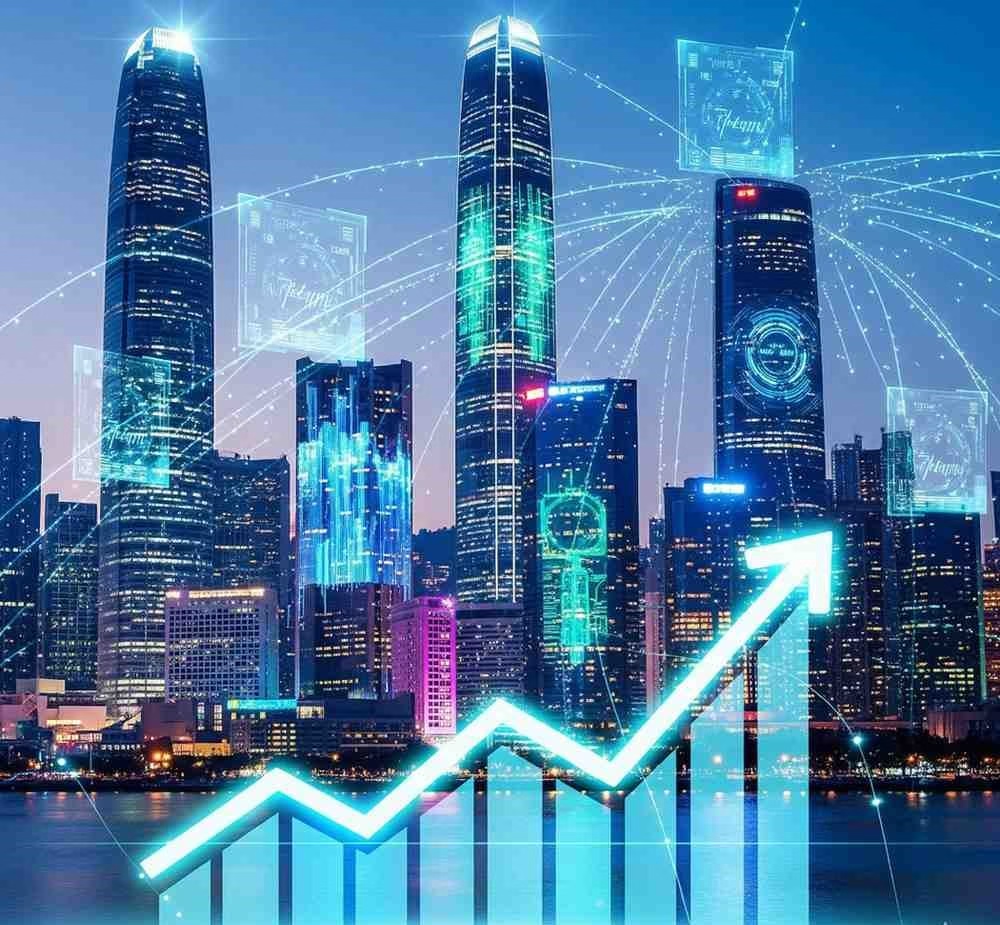
Beijing, September 1, 2025 — In a landmark recognition of China’s technological rise, the United Nations has named the Shenzhen–Hong Kong–Guangzhou cluster the world’s number one innovation hotspot, dethroning Tokyo–Yokohama, which has held the top spot for years. The announcement underscores a global shift in research, development, and intellectual property creation — with Asia firmly at the center of the innovation race.
🚀 A Region on the Rise
The UN’s World Innovation Index (WII) 2025 highlights how the southern Chinese cluster — often called the “Greater Bay Area” — has rapidly transformed from a manufacturing powerhouse into a global epicenter for advanced technology, startups, and R&D.
The region is home to giants like Huawei, Tencent, BYD, and DJI, as well as hundreds of unicorn startups in fields ranging from AI to biotechnology. With a combined GDP exceeding $2 trillion, the Greater Bay Area is now considered one of the most dynamic urban economies in the world.
📊 Why Shenzhen–Hong Kong–Guangzhou?
Several factors pushed this cluster to the top of the global innovation ladder:
- Heavy R&D Spending: China’s annual R&D expenditure now surpasses $650 billion, with the Greater Bay Area receiving a significant share.
- Intellectual Property Strength: The region leads the world in patent filings, particularly in 5G, electric vehicles, and AI.
- Startup Ecosystem: Hong Kong’s financial hub, paired with Shenzhen’s manufacturing agility and Guangzhou’s logistics networks, creates a fertile ground for tech startups.
- Global Connectivity: Proximity to global markets and talent flows gives the cluster a strategic edge.
⚖️ The Global Impact
The shift marks a symbolic moment in the global innovation hierarchy. For decades, Tokyo–Yokohama was the benchmark, representing Japan’s unmatched prowess in electronics and automotive industries. Now, the Greater Bay Area’s ascent reflects China’s ambition to dominate the industries of the future — from semiconductors to green tech.
“This is more than just a ranking,” said a UN Innovation Index researcher. “It signals the rebalancing of global innovation power — with China now leading not just in scale, but in originality.”
🌍 The Race for Innovation Leadership
- Tokyo–Yokohama, while slipping to second, remains a formidable player with strengths in robotics, automotive tech, and precision engineering.
- Silicon Valley (San Francisco–San Jose), ranked third, still dominates venture capital funding but faces competition from Asia’s fast-scaling clusters.
- Emerging hubs such as Seoul, Bangalore, and Singapore are also climbing the charts, intensifying the global innovation race.
🔮 What’s Next for the Greater Bay Area?
Experts believe the region is just entering its next growth phase:
- AI & Robotics: Shenzhen already leads in consumer drones and is expanding into industrial automation.
- Green Tech: BYD and other local firms are driving the global transition to electric mobility.
- Biotech & Healthcare: Guangzhou is positioning itself as a hub for life sciences research.
- Cross-Border Collaboration: Hong Kong’s role as a financial gateway will continue to attract global investors into China’s innovation ecosystem.
👉 Bottom Line
The elevation of Shenzhen–Hong Kong–Guangzhou to the world’s top innovation hotspot is more than a triumph for China — it’s a sign of the changing order of global technological power. With Tokyo and Silicon Valley now trailing, the Greater Bay Area is not just shaping the industries of tomorrow — it is defining where the future of innovation will be built.