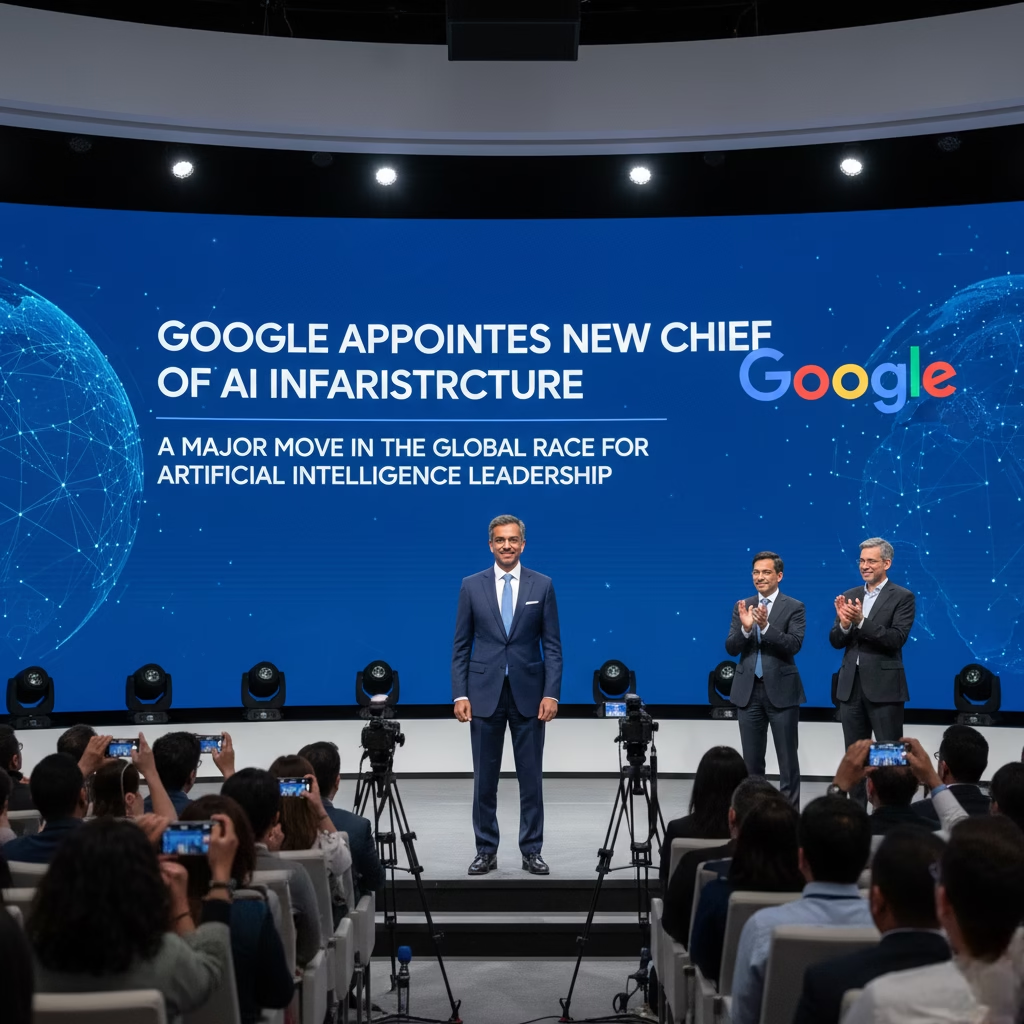
Artificial intelligence has become the most competitive sector in global technology, and companies around the world are investing heavily to secure their position in the future of deep learning, machine learning and large scale computing. In a major development that has caught the attention of investors, industry experts and technology enthusiasts, Google has appointed a new Chief of AI Infrastructure to strengthen its leadership in the worldwide AI race.
This appointment is currently trending online as thousands of people are searching for information related to Google AI infrastructure, Google AI leadership changes, AI cloud competition, AI supercomputers, and the future of AI computing power. The move signals a bold and strategic shift in how Google plans to scale its AI operations, compete with rivals, and develop more advanced AI technologies.
This detailed blog explores what the new appointment means, why AI infrastructure is becoming the most important battleground and how this decision is likely to influence the future of artificial intelligence development.
Why Google’s New AI Infrastructure Leader Matters
Artificial intelligence systems today require massive computing power. Building, training and running modern AI models demands advanced data centers, high performance chips, specialized networking systems and large scale cloud infrastructure.
By appointing a new Chief of AI Infrastructure, Google is prioritizing the creation of stronger and more efficient AI computing systems. This move highlights the company’s desire to remain competitive against other major AI players and cloud providers.
The role is crucial because AI infrastructure is the backbone of everything Google wants to build in the future. From search to cloud, from advertisements to robotics and from generative models to autonomous systems, every innovation depends on powerful AI hardware and software working together.
Google’s new leadership aims to accelerate development in the following areas:
- More advanced AI data centers
- Custom AI chips
- Energy efficient computing
- Scalable cloud AI solutions
- Larger model training capabilities
- Enterprise level AI adoption
This is not just an internal leadership change. It is a major strategic decision that will impact Google’s future direction.
The Rising Global Competition in AI Infrastructure
Tech giants are racing to create the most powerful AI infrastructure in the world. Companies like Google, Microsoft, Amazon, OpenAI, Nvidia and Meta are investing billions in large scale computing.
The competition is driven by three major factors:
1. The explosive growth of generative AI
Generative models require huge computing power. Companies that have the fastest training and deployment systems get ahead in the market.
2. The demand from enterprises
Businesses want scalable AI tools for automation, analytics and decision support. The cloud providers with the best AI systems will attract more enterprise customers.
3. The need for custom chips and supercomputers
General hardware cannot support the latest AI systems. Companies need specialized processors, accelerators and high performance infrastructure to handle complex AI training.
Google is already known for its Tensor Processing Units, a custom chip designed for AI tasks. However, with rapid advancements in the industry, stronger leadership is needed to push innovation forward.
This explains why Google’s appointment is creating strong interest globally.
How Google’s New AI Infrastructure Leader Will Shape Strategy
With new leadership, Google aims to focus on several key strategic areas.
1. Building next generation AI data centers
Google wants to create data centers that can support multimodal AI systems, large language models and advanced robotics research.
New infrastructure will focus on:
- Faster processing
- Lower energy use
- Better cooling systems
- Greater scalability
2. Strengthening Google Cloud AI services
Google Cloud is competing with Microsoft Azure and Amazon Web Services for global AI dominance. The new AI infrastructure head will accelerate cloud based AI tools, making them more efficient for companies.
Businesses will benefit from:
- Faster deployment
- Cheaper AI solutions
- Better compute availability
- More reliable AI platforms
3. Developing advanced AI chips
One of Google’s major competitive advantages is its TPU line. The new leader is expected to push development of newer chips that can compete with Nvidia’s top performing GPUs.
If Google succeeds, the company will reduce dependency on external chip suppliers, potentially increasing performance and lowering costs.
4. Reducing training time for large scale models
Training a large AI model can take weeks or even months. Google wants to reduce this time dramatically. Faster training means:
- Faster innovation
- Lower costs
- More frequent model updates
This is essential for staying ahead in the global AI competition.
5. Increasing AI safety and reliability
Building stronger infrastructure also improves model accuracy and reduces errors. This helps Google develop safer and more robust AI systems for consumers and businesses.
Impact on the Global AI Ecosystem
The appointment of a new AI infrastructure head at Google is expected to influence the entire AI ecosystem.
1. More competition in cloud AI
Google’s move will intensify competition with Microsoft and Amazon, whose AI cloud platforms are growing rapidly.
2. Faster innovation in AI technologies
Companies will race to develop:
- Larger models
- Faster training systems
- More efficient data pipelines
- Smarter automation tools
3. Lower AI costs for businesses
As infrastructure becomes more efficient, AI services become cheaper. This will lead to wider adoption in industries such as:
- Finance
- Healthcare
- Logistics
- Retail
- Manufacturing
- Education
4. More job opportunities in AI engineering
A stronger AI infrastructure requires:
- Data center engineers
- Chip designers
- Cloud architects
- Network engineers
- AI researchers
This appointment reinforces Google’s commitment to expanding technical teams worldwide.
How the Public and Industry Are Responding
Search trends show that people are highly interested in:
- Google AI infrastructure
- Google AI leadership changes
- Google AI strategy
- AI computing power
- Cloud AI competition
- Google next generation data centers
The news has generated discussions among:
- Technology analysts
- AI researchers
- Investors
- Developers
- Corporate leaders
- Cloud industry experts
The general reaction is positive because strong AI infrastructure is essential for future innovation.
Conclusion
Google’s decision to appoint a new Chief of AI Infrastructure marks a turning point in the company’s long term strategy. With the global AI ecosystem expanding at an unprecedented pace, companies need faster chips, stronger data centers and more powerful cloud systems to stay competitive.
This leadership change shows that Google is preparing for the next stage of AI growth, focusing on innovation, performance and large scale computing. The impact of this decision will influence enterprise technology, cloud services, AI development and the global battle for artificial intelligence leadership.