Corporate workplaces around the world are undergoing major changes as companies race to keep up with rapid shifts in technology, workforce expectations, productivity challenges, and new regulations. As of 10 December 2025, some of the biggest corporate trends include AI transformation, hybrid work restructuring, major employee retention initiatives, and a global focus on mental wellness at work. These topics are among the most searched corporate keywords this month, and businesses using these strategies are seeing strong results.
Global Companies Launch Large Scale AI Upskilling Programs
AI is dominating corporate decisions in 2025. Companies across the USA, Europe, and Asia have launched new internal AI training programs to prepare employees for AI powered workflows. Research shows that teams trained in AI tools complete tasks faster, reduce errors, and improve decision making quality.
Companies are investing heavily in:
- AI workflow automation
- AI assisted customer support
- Predictive analytics for sales and operations
- Workplace tools that reduce manual work
Many employees fear that AI might replace jobs, but companies are reassuring workers that upskilling is the main focus. The new trend is AI plus human strategy, not AI replacing humans. Employees who adapt to AI tools are becoming more valuable, and companies are prioritizing internal training over external hiring.
Hybrid Work Gets Structured After Productivity Drop
Corporate leaders have reported a decline in productivity due to unstructured hybrid work. To fix this, companies are introducing clear hybrid rules that balance office collaboration with remote focus time.
New hybrid models include:
- fixed collaboration days for meetings
- no meeting focus days
- digital performance tracking
- outcome based evaluation instead of hours
Clear scheduling helps teams work better, reduces confusion, and improves employee engagement. Workers prefer flexibility, and companies that offer consistent hybrid rules are seeing higher retention rates.
Corporates Implement Stronger Mental Wellness Policies
Stress levels have increased in the workplace, leading companies to introduce advanced mental wellness programs. These programs are now more structured and result driven compared to previous years.
The latest wellness strategies include:
- mental health counselors for employees
- burnout prevention sessions
- quarterly wellness check ins
- flexible hours during high workload seasons
A healthy workforce is directly linked to higher productivity. Companies adopting real wellness strategies are reducing sick leaves, burnout cases, and resignation rates.
Employee Retention Becomes Top Priority After High Attrition
Many industries experienced high attrition in 2024 and early 2025. Corporates have responded by creating new internal growth opportunities and faster promotion cycles to retain employees.
The latest retention strategies include:
- internal job switching
- skill based promotions
- mentorship programs
- transparent career paths
Employees who see a clear future in the company stay longer. This shift is helping corporates reduce hiring costs and improve long term loyalty.
Corporate Leadership Training Grows Due to Rising Team Conflicts
Companies have identified a major cause of employee dissatisfaction. Poor leadership and miscommunication lead to conflicts, disengagement, and quiet quitting. As a result, corporate leadership training has become one of the top priorities in 2025.
Leaders are being trained in:
- emotional intelligence
- team motivation
- conflict management
- communication skills
- performance coaching
Companies that invest in leadership development report stronger team culture and better collaboration across departments.
Global Skills Shortage Pushes Companies to Hire Remote Talent
There is a rising skill shortage in sectors like technology, marketing, finance, and operations. To solve this problem, corporates are hiring remote workers from multiple countries.
Remote hiring trends for 2025 include:
- contract based global hiring
- remote onboarding systems
- virtual collaboration tools
- skill over location strategy
Companies now choose the best talent regardless of location. This approach increases productivity and brings diverse perspectives to the workplace.
Workplace Automation to Reduce Repetitive Tasks
Automation tools are being adopted rapidly to reduce repetitive tasks and increase accuracy. Companies are using automation for data entry, reporting, customer support, and internal communication.
Automation helps employees save time and focus on value driven work. It also reduces errors and ensures consistent performance across teams.
Companies Redesign Offices to Support Modern Work Styles
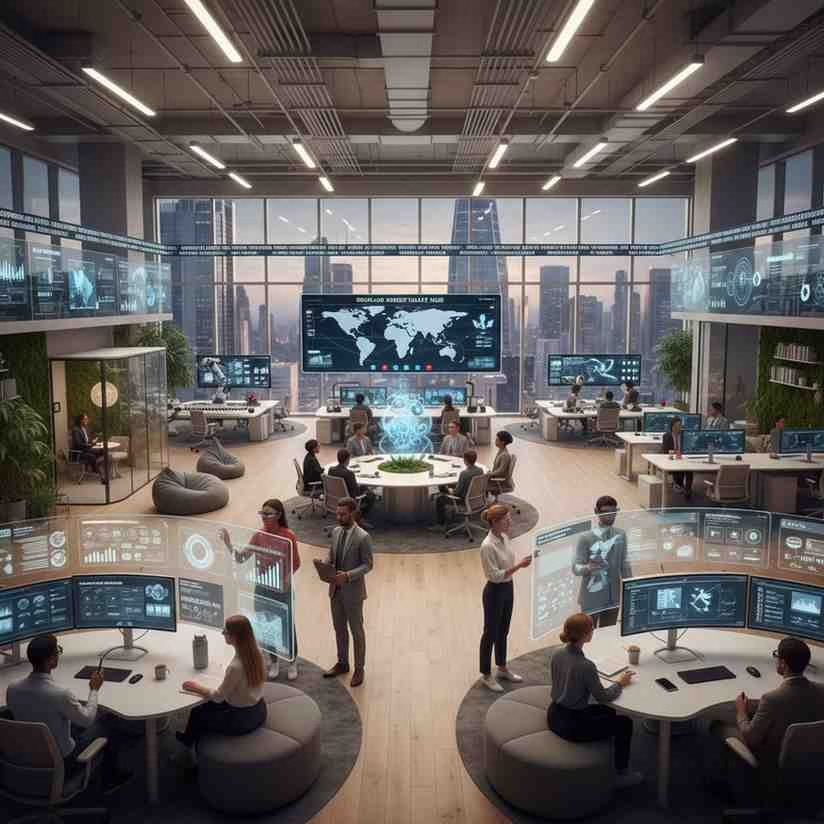
Office designs are changing with a focus on collaboration, creativity, and employee comfort. The newest office design trends in 2025 include:
- open collaborative zones
- quiet focus pods
- digital screens for real time project dashboards
- wellness corners for relaxation
A well designed workspace improves employee satisfaction, creativity, and team spirit.
Corporate Fraud Prevention Becomes a Major Focus
The corporate world has seen a rise in internal fraud and compliance issues. Companies are implementing strong fraud prevention systems with technology driven monitoring, transparent policies, and strict auditing standards.
This includes:
- digital audit trails
- transaction monitoring tools
- employee behavior analytics
- compliance training for all departments
These tools help companies detect issues early and protect business integrity.
Global Salary Adjustments Planned for 2026
Due to inflation, talent competition, and increased living costs, many companies have announced salary adjustments planned for early 2026. These adjustments focus on competitive pay, performance bonuses, and role based allowances.
Companies offering transparent salary structures are building trust and reducing internal dissatisfaction.
Future of Corporate Work Beyond 2025
Corporate work is moving toward a balanced model where technology, flexibility, wellness, and employee growth are equally prioritized. Companies that embrace AI, hybrid structure, wellness programs, and leadership training are creating stronger, more resilient workplaces.
The future corporate environment depends on adaptability. Organizations that make continuous improvements will attract top talent, boost productivity, and maintain long term success.