The Reserve Bank of India (RBI) has put forth a proposal to relax external borrowing rules for Indian firms, aiming to enhance their financial strength.
The proposed changes allow firms to raise up to $1 billion or 300% of their net worth, a significant shift from the previous cap of $1.5 billion.
By linking corporate foreign borrowing limits to financial strength and scrapping cost caps on most such debt, the RBI aims to improve funding flows.
Key Takeaways
The RBI’s proposal allows Indian firms to raise more funds from abroad.
The new limits are linked to a firm’s financial strength.
The move is expected to boost funding flows for Indian companies.
The RBI aims to simplify external borrowing rules.
The changes are likely to benefit Indian firms looking to expand globally.
The New External Borrowing Framework
The RBI’s proposed new external borrowing framework is designed to ease borrowing rules for Indian businesses, enhancing their financial strength and competitiveness in the global market.
Key Highlights of the Proposal
The RBI’s proposal includes several key highlights that are expected to significantly impact the external borrowing landscape.
Major Policy Shifts
The proposed framework introduces significant policy shifts aimed at simplifying and liberalizing external borrowing norms.
Easing borrowing limits for businesses
Simplifying the approval process
Expanding eligible borrower categories
Regulatory Amendments
To support the new framework, the RBI is proposing regulatory amendments that will provide clarity and flexibility to borrowers.
Revising existing guidelines to align with the new framework
Enhancing disclosure requirements for transparency
Timeline for Implementation
The RBI has invited feedback on the proposals until October 24 before finalizing the rules, indicating a structured timeline for implementation.
Consultation Period
The consultation period is a crucial phase where stakeholders can provide their inputs on the proposed framework.
Expected Rollout Phases
The RBI is expected to roll out the new framework in phases, ensuring a smooth transition for businesses.
Understanding India’s Current ECB Regulations
Understanding the existing ECB regulations is essential for comprehending India’s approach to foreign commercial borrowings. India’s External Commercial Borrowings (ECB) regulations form a critical part of the country’s economic framework, governing how Indian entities can borrow from foreign lenders.
Existing Framework Overview
The current ECB framework in India is designed to manage external borrowings effectively, ensuring economic stability while allowing entities to access international capital.
Current Borrowing Limits
As of now, Indian entities can borrow up to a certain limit, which is determined based on factors such as the borrower’s category and the end-use of the funds. The borrowing limits are set to ensure that entities do not over-leverage themselves.
Eligible Borrower Categories
Previously, only entities eligible for foreign direct investment could access overseas debt. The current regulations specify which categories of borrowers are eligible to borrow externally.
Eligible Borrower CategoryBorrowing LimitCategory IUp to $50 millionCategory IIUp to $100 millionCategory IIIUp to $200 million
Limitations of Current Rules
Despite the framework, there are several limitations to the current ECB regulations. These include approval bottlenecks and sector restrictions, which can hinder the smooth flow of foreign capital into the country.
Approval Bottlenecks
The current approval process for ECBs can be lengthy and bureaucratic, causing delays for borrowers. Simplifying this process is crucial for improving the ease of doing business.
Sector Restrictions
Certain sectors are restricted from accessing ECBs, limiting their ability to raise capital internationally. These restrictions are in place to prevent over-exposure in sensitive sectors.
RBI Proposes Easing External Borrowing Rules: A Detailed Analysis
The Reserve Bank of India’s (RBI) recent proposal to ease external borrowing rules marks a significant shift in India’s approach to managing foreign debt. This move is expected to have far-reaching implications for Indian businesses, particularly in terms of accessing international capital.
Specific Changes to Borrowing Limits
The RBI proposal allows firms to raise up to $1 billion or 300% of net worth, whichever is higher. This significant increase in borrowing limits is expected to provide Indian companies with greater flexibility in managing their foreign debt.
Increased Thresholds
The increased thresholds are expected to benefit large corporates and MSMEs alike. Key benefits include:
Increased access to international capital
Improved liquidity for businesses
Enhanced ability to manage foreign exchange risks
Sector-wise Adjustments
The RBI has also proposed sector-wise adjustments to borrowing limits, recognizing the diverse needs of different industries. For instance, infrastructure and manufacturing sectors may have different borrowing limits compared to technology and service sectors.
Simplified Approval Process
The RBI’s proposal also aims to simplify the approval process for external commercial borrowings. This includes:
Automatic route expansions to reduce the need for prior RBI approval
Simplified documentation requirements to reduce the administrative burden on businesses
Automatic Route Expansions
The expansion of the automatic route is expected to reduce the time taken for approvals, enabling businesses to respond quickly to market opportunities.
Documentation Requirements
The simplification of documentation requirements will reduce the compliance burden on businesses, making it easier for them to access international capital.
New Eligible Borrower Categories
The RBI’s proposal also includes the introduction of new eligible borrower categories, aimed at promoting economic growth across various sectors.
Inclusion of Additional Sectors
The inclusion of additional sectors is expected to broaden the scope of external commercial borrowings, enabling a wider range of businesses to access international capital.
Special Provisions for MSMEs
Special provisions for MSMEs are expected to provide these businesses with greater access to foreign capital, enabling them to compete more effectively in the global market.
Why Is RBI Making These Changes Now?
The Reserve Bank of India (RBI) has proposed significant changes to its external commercial borrowing (ECB) framework, sparking curiosity about the motivations behind these moves. The decision is largely driven by the need to stimulate economic growth and improve the overall investment climate in India.
Economic Growth Imperatives
The RBI’s move is aimed at supporting post-pandemic recovery efforts by making it easier for businesses to access international funds. This is crucial in the current scenario, where global economic conditions are highly uncertain.
Supporting Post-Pandemic Recovery
The pandemic has had a significant impact on businesses worldwide, and India is no exception. By easing ECB rules, the RBI aims to provide companies with the necessary funds to recover and grow.
Boosting Investment Climate
A more liberal ECB framework is expected to boost the investment climate by attracting foreign capital. This, in turn, can lead to increased economic activity and job creation.
Global Financial Environment
The RBI’s decision is also influenced by the global financial environment, particularly interest rate differentials between India and other major economies.
Interest Rate Differentials
With interest rates being relatively lower in global markets compared to India, the RBI’s move allows Indian businesses to tap into cheaper foreign funds, thereby reducing their borrowing costs.
Capital Flow Opportunities
The new ECB framework is expected to create new capital flow opportunities, as foreign investors look to capitalize on India’s growth potential.
How These Changes Will Benefit Indian Businesses
With the RBI’s proposed changes to external borrowing rules, Indian companies can expect to tap into cheaper global capital, driving growth and expansion. The recent surge in External Commercial Borrowings (ECBs) to $61.2 billion in FY24-25, a 26% increase from the previous year, indicates a growing appetite for international funds.
Access to Cheaper International Funds
The new framework promises to make international borrowing more attractive for Indian businesses. Two key benefits of this access are:
Cost Savings Potential
By allowing companies to borrow at competitive international rates, the RBI’s proposal can lead to significant cost savings. This is particularly beneficial for businesses with large capital expenditure plans.
Longer Maturity Options
The proposed changes also offer the potential for longer maturity periods, reducing the short-term debt servicing burden on companies and allowing them to align their borrowing with long-term project timelines.
Expansion Opportunities for Corporates
The eased ECB norms will likely spur corporate expansion both domestically and internationally. Key areas of focus include:
Capital Expenditure Financing
With easier access to international funds, companies can finance large-scale projects more efficiently, driving capital expenditure and potentially boosting economic growth.
Competitive Advantage in Global Markets
By enabling Indian businesses to tap into global capital at competitive rates, the RBI’s proposal can enhance their competitive advantage in international markets, supporting their global expansion strategies.
The RBI’s initiatives are expected to create a more favorable borrowing environment, ultimately contributing to the growth and global competitiveness of Indian businesses.
Impact on India’s Foreign Exchange Reserves
With the RBI proposing to widen the pool of eligible borrowers and lenders, India’s foreign exchange reserves may experience a notable shift. The Reserve Bank of India’s (RBI) proposal to ease external borrowing rules is expected to influence the country’s foreign exchange reserves, which play a crucial role in maintaining economic stability.
Managing Currency Fluctuation Risks
The RBI’s proposal includes measures to manage currency fluctuation risks, which are critical in maintaining the stability of India’s foreign exchange reserves. To achieve this, the RBI has outlined specific hedging requirements for borrowers.
RBI’s Hedging Requirements
The RBI’s hedging requirements are designed to mitigate the risks associated with currency fluctuations. By mandating that borrowers hedge a certain percentage of their external borrowings, the RBI aims to reduce the impact of exchange rate volatility on India’s foreign exchange reserves.
Forex Market Stability Measures
In addition to hedging requirements, the RBI has proposed measures to enhance forex market stability. These measures include monitoring foreign exchange transactions and maintaining a stable exchange rate.
Balancing External Debt Exposure
Another key aspect of the RBI’s proposal is balancing external debt exposure. The RBI aims to ensure that India’s external debt remains sustainable and does not pose a significant risk to the country’s economic stability.
Debt-to-GDP Considerations
The RBI will need to carefully consider the debt-to-GDP ratio when evaluating the impact of external borrowings on India’s economy. A high debt-to-GDP ratio can indicate a higher risk of debt distress.
Short-term vs. Long-term Borrowings
The RBI’s proposal also distinguishes between short-term and long-term borrowings. While short-term borrowings can provide immediate liquidity, long-term borrowings are more suitable for financing long-term projects.
The potential impact of the RBI’s proposal on India’s foreign exchange reserves can be summarized as follows:
CategoryImpactRisk Management MeasuresCurrency Fluctuation RisksHighHedging requirements, Forex market stability measuresExternal Debt ExposureModerateDebt-to-GDP considerations, Short-term vs. long-term borrowingsForeign Exchange ReservesVariableMonitoring foreign exchange transactions, Maintaining a stable exchange rate
Sector-Specific Implications
The RBI’s move to ease external borrowing rules will have a sector-specific impact, influencing infrastructure, manufacturing, and technology. As the proposal allows any India-incorporated entity to tap external borrowings, various sectors are poised to benefit.
Infrastructure and Manufacturing
The infrastructure and manufacturing sectors are likely to see significant benefits from the RBI’s proposal. With easier access to external borrowings, these sectors can fund large-scale projects more efficiently.
Project Financing Benefits
According to
“The easing of ECB rules will provide a significant boost to infrastructure projects, enabling them to access global funding at competitive rates.”
This will be particularly beneficial for long-term projects that require substantial capital investment.
Import of Capital Goods
Manufacturers will also benefit from the ability to import capital goods using external commercial borrowings. This can enhance productivity and competitiveness in the global market.
Technology and Service Sectors
The technology and service sectors will also experience a positive impact from the RBI’s proposal. Easier access to external funding can facilitate research and development, as well as global expansion.
R&D Funding Opportunities
Technology companies can leverage external borrowings to fund R&D initiatives, driving innovation and competitiveness. Increased R&D funding can lead to the development of new technologies and products.
Global Expansion Financing
Service sector companies, including IT services, can use external borrowings to finance global expansion plans, enhancing their presence in international markets.
MSMEs and Startups
Micro, Small, and Medium Enterprises (MSMEs) and startups will have new funding avenues available due to the RBI’s proposal. This can be crucial for their growth and development.
New Funding Avenues
MSMEs and startups often face challenges in accessing capital. The RBI’s move can provide them with alternative funding options, enabling them to grow and innovate.
Growth Capital Access
With easier access to external borrowings, MSMEs and startups can secure the capital needed for expansion and scaling their operations.
Global Context: How India Compares to Other Emerging Markets
As India navigates its economic growth, its external borrowing policies are being measured against those of other BRICS nations. The Reserve Bank of India’s proposal to link corporate foreign borrowing limits to financial strength is a significant step in this direction.
External Borrowing Policies in BRICS Nations
The BRICS nations have diverse approaches to external borrowing. China, for instance, has a more controlled environment, while Brazil and South Africa have more open policies.
China’s Approach
China’s external borrowing is heavily regulated, with a focus on state-controlled entities. This approach allows for tight control over foreign debt but can limit private sector participation.
Brazil and South Africa Models
In contrast, Brazil and South Africa have more liberal external borrowing policies, allowing for greater private sector involvement. However, this comes with the risk of increased foreign debt exposure.
Competitive Positioning in Global Capital Markets
India’s competitive positioning in global capital markets is influenced by its external borrowing policies. Attractiveness to foreign lenders and risk premium comparisons are crucial factors.
Attractiveness to Foreign Lenders
India’s attractiveness to foreign lenders is enhanced by its growing economy and reforms. However, the risk premium remains a concern.
Risk Premium Comparisons
CountryRisk PremiumIndia150 bpsChina120 bpsBrazil180 bpsSouth Africa200 bps
Expert Opinions on the Proposed Changes
As the RBI invites feedback on its proposed changes to external borrowing regulations, experts are weighing in on the potential implications. The deadline for feedback is October 24, after which the RBI will finalize the rules.
Banking Sector Perspectives
The banking sector has mixed views on the RBI’s proposal. Public sector banks are cautious, citing concerns about potential risks associated with increased external borrowing.
Public Sector Banks’ Views
According to a public sector bank official, “While the proposal is a step in the right direction, we need to carefully assess the potential risks before implementing the changes.”
Private and Foreign Banks’ Stance
Private and foreign banks, on the other hand, are more optimistic, seeing the proposal as an opportunity to increase their lending capabilities and improve their competitiveness.
Economic Analysts’ Views
Economic analysts are also divided on the proposal. Some believe it will boost economic growth, while others are concerned about the potential risk assessments.
Growth Projections
Analysts project that the easing of external borrowing rules could lead to increased foreign investment, potentially boosting economic growth by 0.5% to 1%.
Risk Assessments
However, there are concerns that increased external borrowing could expose Indian businesses to currency fluctuation risks, potentially leading to financial instability.
Industry Leaders’ Reactions
Industry leaders have welcomed the proposal, seeing it as a positive step towards improving access to international funds.
CII and FICCI Statements
The Confederation of Indian Industry (CII) and the Federation of Indian Chambers of Commerce and Industry (FICCI) have issued statements supporting the RBI’s move, citing its potential to enhance the competitiveness of Indian businesses.
Corporate CFO Perspectives
Chief Financial Officers (CFOs) of major corporations have also expressed optimism, noting that the proposed changes could provide their companies with more flexibility in managing their foreign exchange exposures.
Potential Challenges and Risk Factors
The RBI’s proposal to ease external borrowing rules, while aimed at boosting economic growth, poses several potential challenges and risk factors that need to be carefully managed.
Currency Depreciation Concerns
One of the significant risks associated with increased foreign borrowing is currency depreciation. When Indian companies borrow more in foreign currency, they become more vulnerable to exchange rate fluctuations.
Impact on Repayment Obligations
A depreciating rupee can increase the burden of repayment for companies with foreign currency-denominated debt, potentially leading to financial distress.
Hedging Cost Implications
To mitigate this risk, companies may need to hedge their foreign currency exposure, which can add to their costs and affect their bottom line.
Debt Sustainability Issues
Another critical risk is related to debt sustainability. As companies take on more debt, their leverage ratios may deteriorate, making them more vulnerable to economic downturns.
Corporate Leverage Ratios
Increased borrowing can lead to higher leverage ratios, potentially making it more challenging for companies to service their debt.
Default Risk Management
Effective default risk management strategies will be crucial to mitigate the potential risks associated with increased corporate debt.
Conclusion: Balancing Growth and Stability
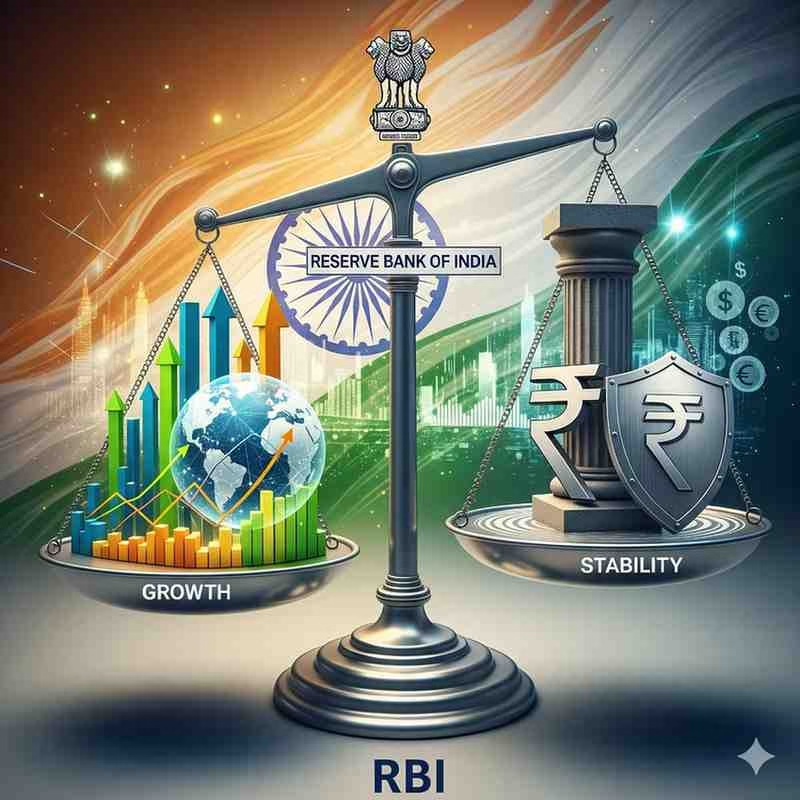
The RBI’s proposal to ease external borrowing rules marks a significant shift in India’s economic policy, aiming to balance growth and stability. By relaxing these rules, the RBI seeks to facilitate access to international funds for Indian businesses, potentially boosting economic growth.