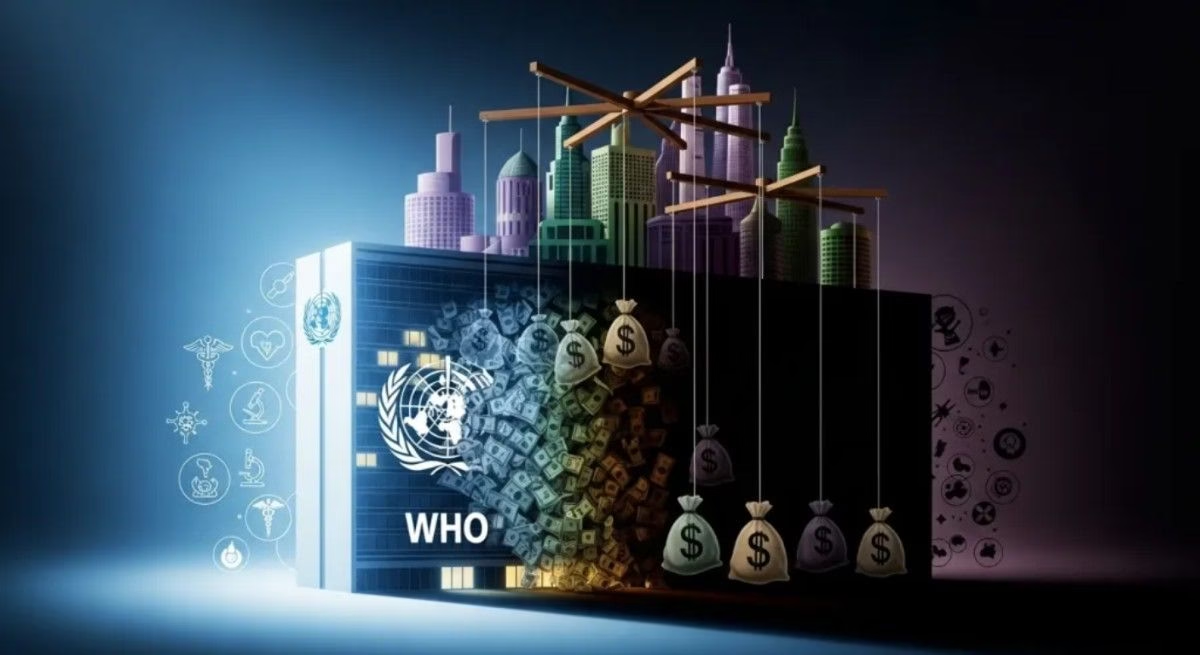
The World Health Organization (WHO), the global body responsible for safeguarding public health, is facing mounting criticism for its growing reliance on large donations from private corporations and wealthy individuals. Concerns are rising that this trend could undermine the organization’s credibility, independence, and ability to act in the best interests of global health.
Rising Influence of Private Donors
Traditionally, the WHO has relied on contributions from its 194 member states to fund core health initiatives such as disease control, vaccination drives, and emergency responses. However, in recent years, voluntary donations from corporations, philanthropic foundations, and high-net-worth individuals have increasingly filled funding gaps.
Experts warn that many of these contributions are “earmarked” for specific projects chosen by the donors, rather than allowing the WHO to direct funds where they are most needed. This shift has raised fears that donor priorities—often aligned with corporate or private interests—could shape global health strategies in ways that sideline more urgent but less profitable issues.
Transparency Concerns
Health watchdog groups have labeled some of these funds as “dark money,” highlighting the lack of transparency in donor disclosures. While official reports provide general details of contributions, critics argue they do not fully reveal how much influence major corporations, including those in the pharmaceutical, food, and beverage industries, wield over WHO programs.
Some experts fear that industries with a history of opposing strict public health regulations may be buying goodwill or softening scrutiny by becoming financial contributors.
Potential Conflicts of Interest
The growing dependence on private money raises questions about conflicts of interest. For example, if a food or beverage company contributes millions to the WHO, will the organization be less inclined to push for tougher regulations on sugar, alcohol, or processed foods? Similarly, pharmaceutical companies funding certain disease programs could indirectly steer research priorities or vaccine rollout strategies.
Public health specialists warn that the WHO’s moral authority—crucial in times of global crisis—could be eroded if the public perceives its decisions as being influenced by donors with vested interests.
Balancing Act for the WHO
WHO officials argue that voluntary funding is essential to meet its ever-expanding responsibilities, especially as member states often delay or reduce mandatory contributions. They insist that safeguards are in place to prevent undue influence and maintain impartiality.
Still, insiders acknowledge that the balance is delicate. Without stricter rules and greater transparency, the WHO risks losing trust at a time when global cooperation on health threats—from pandemics to climate-linked disease outbreaks—is more important than ever.
Global Reactions and Calls for Reform
Several health advocacy groups and member state representatives are now urging the WHO to:
- Increase transparency by publishing detailed records of all corporate donations.
- Limit donor influence by ensuring contributions cannot dictate health priorities.
- Strengthen state funding so the WHO is not forced to depend heavily on private money.
As the world’s leading health authority, the WHO stands at a crossroads. Its ability to maintain independence while securing the resources needed to tackle urgent global health challenges will determine whether it can continue to command the trust of governments and the public alike.