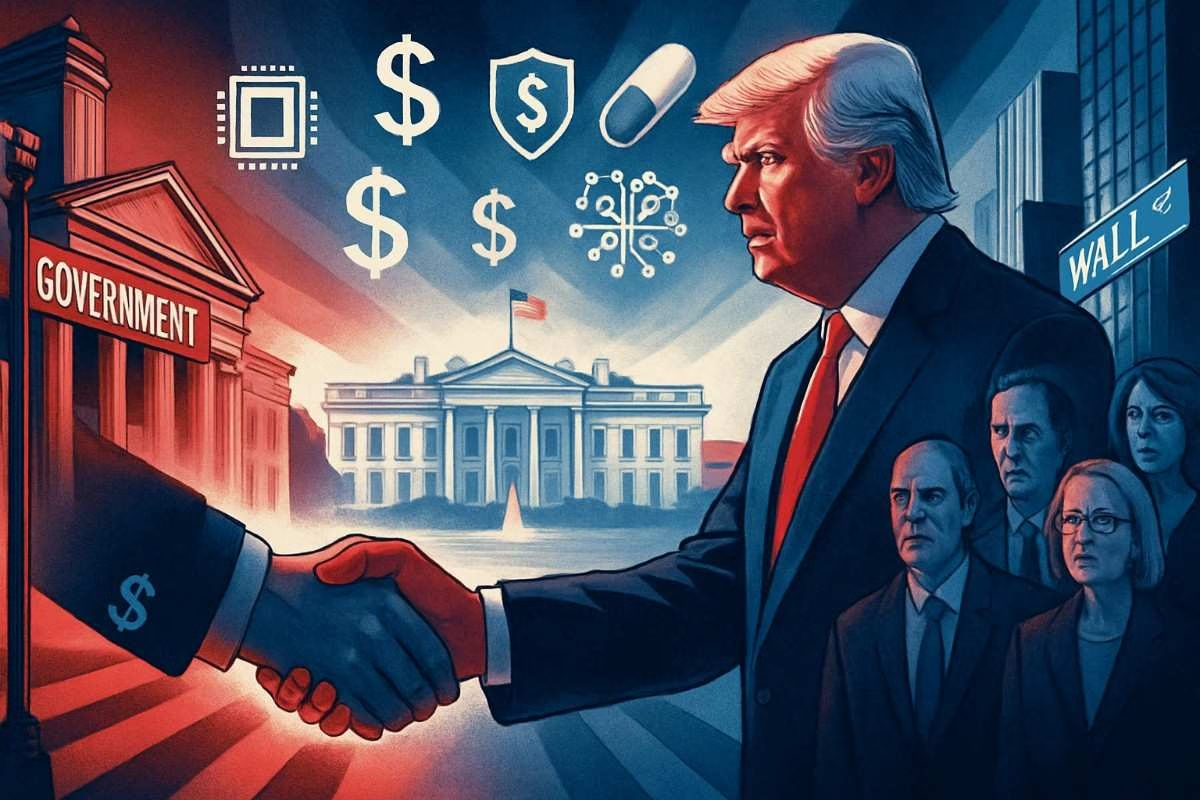
In a bold signal of his economic vision, U.S. President Donald Trump has indicated that he wants to replicate the federal investment deal with Intel across other major American corporations—a move that could fundamentally alter the relationship between Washington and Wall Street.
While the plan is pitched as a way to safeguard U.S. industries and jobs, it has already sparked unease among business leaders, investors, and free-market advocates, who worry it could blur the lines between private enterprise and state-run capitalism.
🔎 The Intel Deal: A Precedent for State Stakes
The flashpoint for the debate was the government’s multi-billion-dollar investment in Intel, designed to boost semiconductor production on U.S. soil amid rising concerns about dependence on Asian supply chains.
Under the deal, Washington didn’t just provide subsidies or tax incentives. Instead, the U.S. government took a direct equity stake in Intel, ensuring it had “skin in the game” as the company expanded its manufacturing capabilities.
Trump has since hailed the deal as a “model for the future”, arguing that similar arrangements could protect key industries, secure jobs, and maintain America’s technological edge in a world increasingly defined by geopolitical competition.
💼 What Trump is Proposing
According to White House aides, Trump envisions targeted federal stakes in strategically vital companies—particularly in sectors like:
- Steel and metals (critical for defense and infrastructure)
- Rare earths and minerals (used in batteries, chips, and clean energy technologies)
- Advanced manufacturing and AI-related industries
- Pharmaceuticals and biotech (to secure supply chains post-pandemic)
The idea is to align private corporate goals with national interests—and to prevent foreign governments, especially China, from gaining undue influence over critical U.S. assets.
📉 Corporate Backlash: Fears of “State-Run Capitalism”
While some industry leaders acknowledge the benefits of government support, many in the corporate world are deeply uneasy about the direction.
Critics warn that:
- Direct federal stakes could distort free markets, discouraging competition.
- Companies may lose strategic independence, being pressured to align with government priorities.
- Political cycles could influence corporate decision-making, leading to short-term populist policies.
- Investors may shy away from firms with heavy government ownership, fearing reduced profitability and tighter regulation.
The U.S. Chamber of Commerce released a statement urging caution, reminding policymakers that “America’s economic strength has always come from its dynamic private sector, not government control.”
🌍 Lessons From Abroad
Trump’s approach resembles economic models more common in countries like China or France, where the state has historically taken equity stakes in “strategic industries.”
- In China, state-backed companies dominate key sectors, raising concerns of unfair competition globally.
- In Europe, countries like France and Germany have occasionally taken partial stakes in airlines, energy companies, and banks during crises.
But for the United States—a country long associated with free-market capitalism—this represents a seismic shift in economic philosophy.
💡 Supporters’ Argument: Protecting America First
Despite the criticism, Trump and his allies argue that the 21st-century economy requires new thinking.
They point to:
- National security risks, such as reliance on Chinese supply chains for rare earth minerals and semiconductors.
- The COVID-19 pandemic, which exposed vulnerabilities in U.S. manufacturing and pharmaceutical supply.
- The AI and green energy race, where government investment could ensure American firms stay globally competitive.
“Without bold action, we risk being at the mercy of foreign governments,” said one senior White House adviser. “Strategic investment ensures America—not Beijing—sets the rules of the future economy.”
📊 Market Reactions
Wall Street has been cautious. Following Trump’s remarks, stocks of defense and manufacturing companies rose modestly, while investors in tech and financial sectors expressed uncertainty.
Analysts warn that if the policy expands aggressively, it could create a two-tier market:
- Firms with federal backing might enjoy unfair advantages (funding, security, and political protection).
- Independent companies might struggle to compete or risk being sidelined.
🔮 What’s Next?
The administration is reportedly drafting a “Strategic Industry Investment Act”, which would formalize the framework for federal stakes in select companies. Congress, however, is divided:
- Republican free-market conservatives worry this undermines capitalism.
- Democrats are split—some see it as a chance to push for green and worker-friendly investments, while others worry about Trump wielding too much influence over corporations.
If passed, the law could mark the biggest economic policy shift in decades, redefining the boundary between government and private business.
⚡ Bottom Line
President Trump’s call for more Intel-style government stakes in private firms signals a radical rethinking of American capitalism.
For supporters, it’s a bold, patriotic move to safeguard U.S. industries, jobs, and security in an increasingly unstable world. For critics, it’s a dangerous flirtation with state-run capitalism, risking innovation, independence, and investor confidence.
Either way, one thing is certain: Trump’s vision has reignited one of the oldest debates in America—how much should the government intervene in the economy?