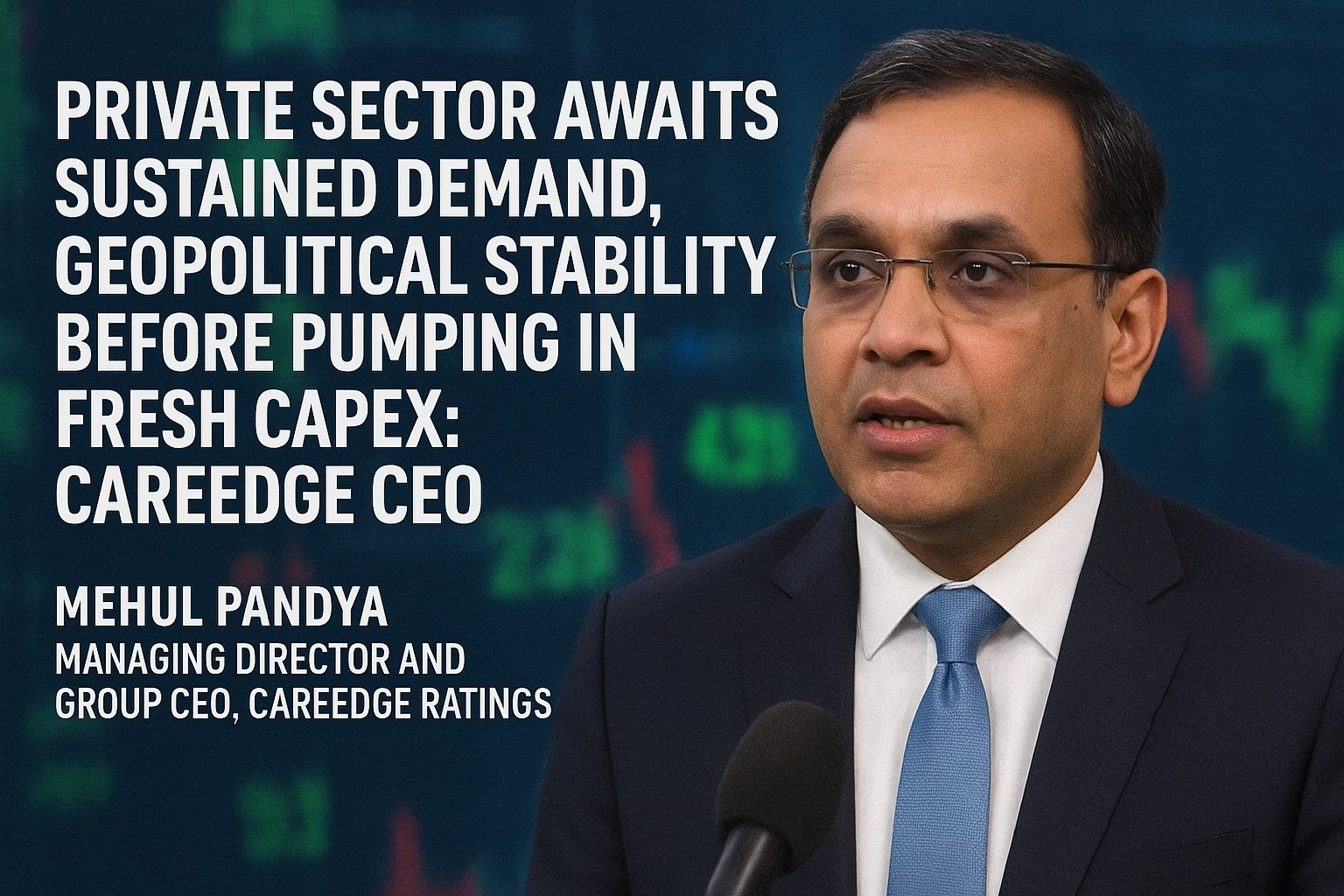
India’s economy is showing strength on paper. Government capital expenditure is at historic highs, infrastructure spending continues at a breakneck pace, and macroeconomic fundamentals are improving. Yet, private capital investment — the crucial ingredient for long-term growth — remains frustratingly sluggish.
Mehul Pandya, Managing Director and Group CEO of CareEdge Ratings, believes the explanation lies in one word: caution. Speaking to ANI, Pandya unpacked why India’s private sector is holding back despite strong signals from New Delhi and a seemingly favorable economic environment.
“Any private sector would like to see sustained demand for themselves,” Pandya emphasized. “If they are committing capital for growth or adding capacities, it would always be based on hardcore economic analysis.”
In other words, CEOs and CFOs are unwilling to write billion-dollar cheques until they see a clear, consistent, and long-lasting appetite for their products or services.
The Demand Puzzle
India’s demand patterns in recent years have been erratic. While certain sectors have experienced bursts of growth, others have been dragged down by fluctuating consumption trends. Pandya noted,
“In between, we have seen the consumption taking a bit of a hit.”
High inflation has been one culprit, gradually eroding the purchasing power of ordinary consumers. This has made it harder for companies to confidently predict whether demand will sustain after the initial post-pandemic rebound.
The government has tried to address this problem. Pandya praised the last Union Budget for its tax reforms, saying,
“They tried to put more money in the hands of the people with changes in tax brackets and rates. This was clearly aimed at supporting demand. The impact should be visible over time.”
However, he cautioned that these positive measures have often been offset by external shocks — developments that were entirely outside India’s control.
Geopolitical Shadows on Business Confidence
The past few years have been a masterclass in unpredictability for global business leaders. Pandemic disruptions, supply chain chaos, energy price spikes, and shifting trade alignments have kept boardrooms on edge. Even though 2024 brought a relatively calmer geopolitical landscape, Pandya warns against complacency.
“A year has passed by where we have seen some kind of a benign global landscape. Something always keeps on happening,” he said, alluding to how quickly unforeseen events can derail corporate investment plans.
From regional conflicts to sudden policy shifts in major economies, the list of potential disruptions is long — and Indian firms are in no mood to gamble.
Government as the Growth Engine
While private players hesitate, the government has been in overdrive. Infrastructure projects — highways, ports, railways, renewable energy — have not only supported GDP growth but also laid the groundwork for long-term competitiveness.
Pandya lauded this approach:
“The government has done fantastically well in driving growth through capital expenditure. This commitment has paid off well for the economy.”
Yet, he stressed that public spending can only take the economy so far. For India to hit higher growth trajectories, private investment must join the party — and right now, it’s standing outside the door, peeking in, waiting for the music to get louder.
The “Mix and Match” Reality of Growth
Economic expansion, Pandya explained, rarely moves in a straight line. Instead, it’s shaped by a combination of supportive and adverse factors — sometimes working together, sometimes at odds.
“In some periods, these factors align in a linear manner, leading to faster results,” he said. “In others, opposing forces can delay progress.”
For now, India’s private sector seems to be betting that patience will pay off. They’re waiting for a moment when demand is both broad-based and durable, and when geopolitical risks have receded enough to allow long-term planning without fear of sudden disruption.
Until then, government capital expenditure will continue to carry much of the growth load — but the real economic acceleration will only come when private boardrooms decide it’s time to turn their caution into capital.